
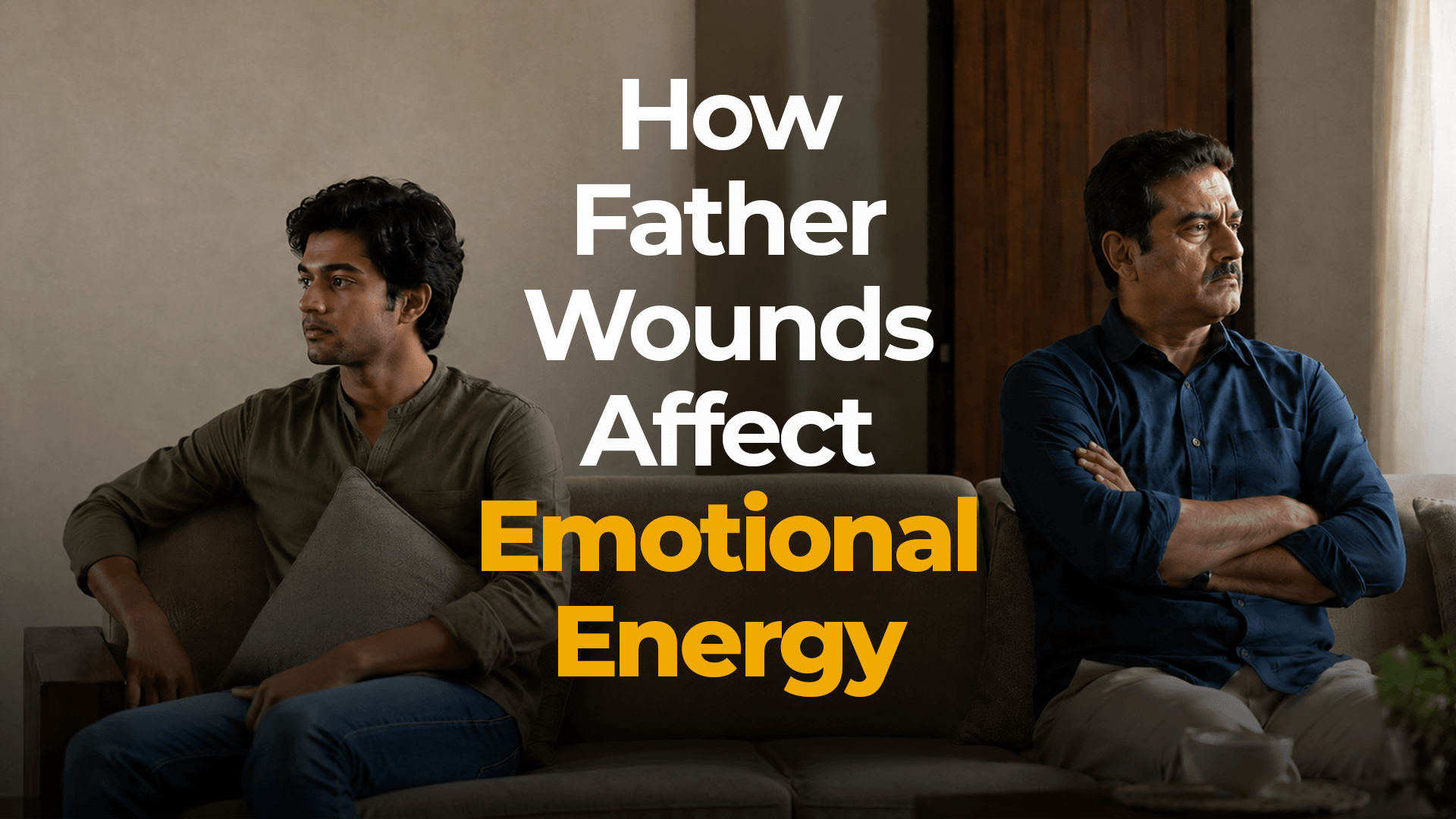
A father’s role is often associated with protection, guidance, stability, and validation. Whether present, absent, emotionally available, critical, unpredictable, or distant, the relationship with a father can leave a deep emotional imprint. These experiences do not stay limited to childhood. They influence emotional patterns, self-worth, relationships, and even the way energy is carried in the body. This is what many people refer to as a “father wound.” It is not about blaming fathers. It is about understanding how certain unmet emotional experiences shape emotional energy over time. Awareness of these patterns creates the possibility of healing.
What Is a Father Wound?
A father wound develops when there is emotional pain connected to the father relationship. Even when basic needs were met, emotional needs may have remained unmet. The wound is not always about what happened, but sometimes it is about what was missing. This may come from:
- Emotional unavailability
- Harsh criticism
- Absence or abandonment
- Lack of validation
- Inconsistent support
- Excessive pressure or control
How Emotional Energy Is Affected
Emotional energy reflects how safe, worthy, and supported you feel internally. When father wounds are present, this energy often becomes tied to seeking approval, fearing rejection, constantly proving one’s worth, maintaining emotional guardedness, and experiencing difficulty trusting support. This persistent internal strain creates deep emotional exhaustion. As a result, you may appear highly functional to the outside world while internally carrying a heavy burden of tension, insecurity, or severe emotional depletion.
The Link Between Father Wounds and Self-Worth
For many people, the father-relationship heavily shapes early ideas about worth and capability. If validation during childhood was conditional, you may internalise the beliefs that love must be earned, that success determines your absolute value, that vulnerability is fundamentally unsafe, and that mistakes inevitably lead to rejection.
As an adult, this conditioning often manifests as chronic perfectionism, severe overworking, an intense fear of failure, and a constant need for external validation. Because of these deep-rooted patterns, your emotional energy becomes entirely dependent on external achievement rather than internal stability.
Emotional Distance and Connection Patterns
Father wounds often influence adult relationships. You may notice:
- Fear of emotional intimacy
- Difficulty trusting others
- Attraction to emotionally unavailable people
- Overdependence on reassurance
- Emotional withdrawal during conflict
These patterns are protective responses learned early, and the nervous system repeats familiar dynamics even when they are painful.
The Nervous System and Masculine Energy
A father figure often represents structure, safety, and groundedness, but when those foundational experiences feel unstable, the nervous system can become trapped in a chronic state of hypervigilance. This internal insecurity frequently manifests as a constant, driving pressure to perform, profound difficulty relaxing, a pervasive feeling of being emotionally unsupported, and a rigid need to stay in control of your environment. Ultimately, the body is forced to learn how to compensate for this missing emotional safety, a defensive posture that, over time, significantly drains and depletes your emotional energy.
Father Wounds and Anger
Unprocessed father wounds often carry hidden anger, not always the explosive kind of anger, but it can sometimes manifest as irritability, emotional numbness, passive resentment, or frustration toward authority figures. Because expressing anger may have felt unsafe earlier, it becomes suppressed, and suppressed anger drains emotional energy. Healing requires acknowledging these emotions without judgment.
Practical Ways to Begin Healing
- Identify recurring emotional patterns
- Separate your worth from achievement
- Allow emotional expression
- Strengthen nervous system regulation
- Redefine masculine energy
- Seek supportive healing spaces
Notice where you seek validation, fear rejection, or overperform.
Your value is not dependent on constant proving.
Sadness, anger, and disappointment need acknowledgement rather than suppression.
Grounding practices, breathwork, and rest help create internal safety.
Healthy masculine energy includes stability, presence, protection, and emotional maturity, not control or emotional suppression.
Therapy, coaching, or reflective practices help process deeper emotional patterns.
The Role of Compassion
Understanding father wounds is not about assigning permanent blame, as many fathers carried unprocessed emotional burdens themselves. Emotional expression was often discouraged across generations. Recognising this context creates compassion without dismissing your experience. Ultimately, both truths can coexist: the fact that you were profoundly affected by their actions, and they may have been deeply limited by their own conditioning. When resentment begins to soften into this broader understanding, the healing process becomes significantly easier, allowing you to break the generational cycle for yourself.
Reclaiming Emotional Energy
As healing progresses and survival patterns relax, your emotional energy naturally returns because you stop spending your vital resources trying to earn what should have felt unconditional. This shift brings noticeable changes:
- Emotional exhaustion reduces as the constant inner strain lifts.
- Boundaries become clearer because your worth is no longer tied to over-delivering.
- Validation becomes internal, grounding you in your own self-approval.
- Relationships feel safer as the fear of rejection diminishes.
- Rest feels possible, allowing your mind and body to genuinely settle.
A Simple Reflection Practice
Take a quiet moment, and ask yourself:
- What did I learn about worth growing up?
- When do I feel the need to prove myself most?
- What kind of emotional support did I need but not receive?
- Write down what comes up, because awareness creates clarity.
Frequently Asked Questions
Q1. Can father wounds affect both men and women?
A. Yes. Early paternal dynamics influence emotional development regardless of gender.
Q2. Does a father wound only come from absence?
A. No. Emotional distance or criticism can create wounds even when a father was physically present.
Q3. Can these patterns change later in life?
A. Yes. Awareness and emotional work can reshape nervous system responses and relationship patterns.
Q4. Is healing possible without confronting my father?
A. Yes. Healing can happen internally through reflection, regulation, and support.
Q5. Why do father wounds affect confidence?
A. Early validation influences self-worth and internal security.
Father wounds affect more than memories. They shape emotional energy, self-perception, and the way safety is experienced in relationships and within yourself. But these patterns are not permanent identities. They are learned responses that can be understood and healed. When you begin separating your worth from approval and create emotional safety internally, your energy changes. You stop living from emotional survival and begin relating to yourself with steadiness, clarity, and self-trust.
Reach Dr. Chandni’s support team at +918800006786 and book an appointment.





























 facebook
  X
X  youtube
  whatsapp
  instagram
  linkedin