
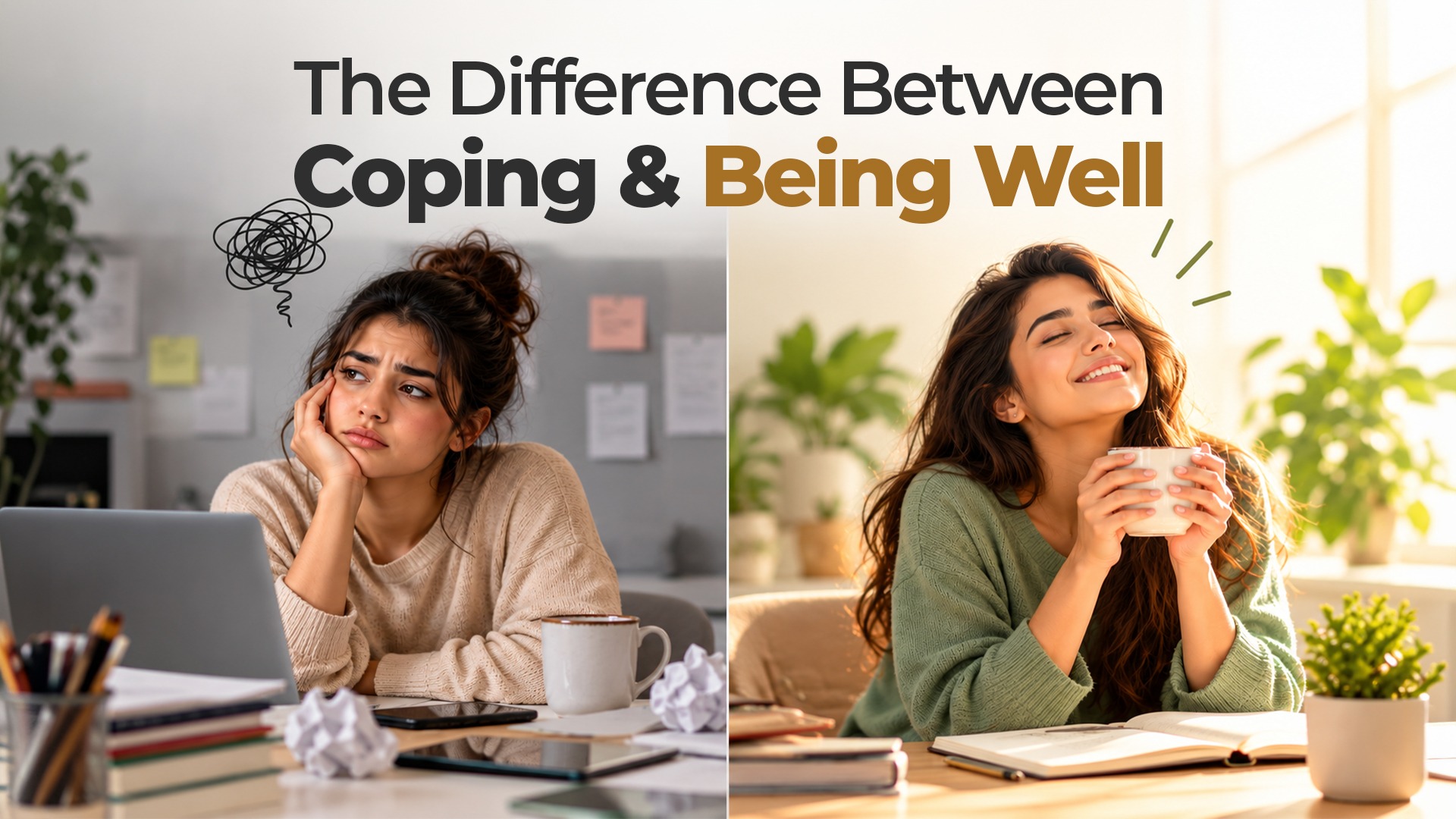
You can be getting things done, meeting deadlines, answering messages and showing up for everyone, and still not be doing well. This is one of the less visible realities of mental health. We often judge our wellbeing by how functional we appear. If we can go to work, manage responsibilities and maintain our routine, we assume we must be fine. But functioning and wellbeing are not the same thing. Sometimes, what looks like strength from the outside is simply a person who has become very skilled at coping.
Coping Can Look Like Wellness
Coping is the mind’s way of helping us manage difficult circumstances, emotions or periods of stress. It can be useful and necessary, especially when life demands more from us than usual. The problem begins when coping becomes our permanent state. You may continue performing well while running on exhaustion. You may laugh with friends while feeling emotionally disconnected. You may stay productive because slowing down would force you to notice how overwhelmed you actually are. Nothing may appear “wrong” from the outside, and yet internally, you may be operating in survival mode. This is why mental health cannot be measured only by productivity or outward functioning.
The High-Functioning Trap
Some people become exceptionally good at hiding their struggles, even from themselves. They keep busy, solve problems, take care of others, rarely ask for help, and tell themselves that they will rest once the current situation settles down. But there is always another deadline, another responsibility or another reason to postpone taking care of themselves. Over time, coping strategies can become part of their identity, like;
- “I am just a very busy person.”
- “I work better under pressure.”
- “I don’t have time to think about it.”
- “I can handle it.”
These statements may sound like resilience, but sometimes they are ways of avoiding what needs attention.
So, What Does Being Well Actually Mean?
Being well does not mean feeling happy all the time or never experiencing stress. A mentally well person can still have difficult days, anxiety, disappointment, grief and frustration. The difference is that difficult emotions do not completely take over their internal world. Wellbeing includes having the capacity to recognise what you are feeling, recover from stress, maintain meaningful relationships, set boundaries and adapt when circumstances change. It also means having some emotional space, not constantly feeling as though you are one more problem away from being overwhelmed.
Five Signs You May Be Coping, Not Thriving
- You function well but rarely feel rested.
- You stay busy to avoid thinking.
- Small things trigger disproportionately large reactions.
- You have stopped asking yourself what you need.
- You are proud of how much you can tolerate.
Your responsibilities are under control, but genuine rest feels unfamiliar or even uncomfortable.
Whenever there is a quiet moment, you immediately reach for work, your phone, entertainment or another task.
Irritability, frustration or emotional outbursts may be signs that your system has very little capacity left.
You know what everyone else expects from you, but struggle to answer a simple question: “What do I need right now?”
Resilience is valuable, but constantly measuring yourself by how much discomfort you can endure can prevent you from recognising when something needs to change.
Coping Is Not the Enemy
It is important not to treat coping mechanisms as something bad, as they often develop for a reason. Staying busy may have helped you get through a difficult period, keeping emotions contained may once have felt safer, and being highly independent may have protected you from disappointment. The question is not, “Why do I cope this way?”, but a more useful question is;
“Does this way of coping still serve me?” A strategy that helped you survive one chapter of your life may become limiting when circumstances change. Growth sometimes means replacing an old coping mechanism with a healthier response.
Moving From Coping to Wellbeing
The shift does not require completely changing your life overnight. It often begins with becoming more honest about your internal experience. Start by noticing the difference between “I can handle this” and “I should have to handle this alone.” Create small periods where you are not performing a role for anyone. Notice your emotions instead of immediately distracting yourself from them. Pay attention to persistent changes in sleep, energy, concentration, relationships or mood, and perhaps most importantly, stop waiting until you are completely overwhelmed before seeking support. Mental health care is not only for moments of crisis. Therapy and professional support can also help you understand patterns, build emotional resilience and develop healthier ways of responding to everyday pressures.
This Mental Health Day, Ask a Different Question
This Mental Health Day, instead of asking yourself, “Am I managing everything?” Ask; “How am I actually doing while I manage everything?” The answer may reveal a very different picture. You do not have to reach breaking point to deserve support. You do not have to prove that you are struggling enough. And you do not have to confuse being productive with being well. Coping helps us get through difficult periods. Wellbeing gives us the capacity to live beyond them, and sometimes, the most important step towards better mental health is recognising that merely holding everything together is not the same as feeling whole.
Frequently Asked Questions
1. What is the difference between coping and being well?
Coping helps a person manage difficult situations, while wellbeing involves having emotional balance, resilience and space to recover.
2. Can someone be functioning well but struggling mentally?
Yes. A person can remain productive and responsible while experiencing exhaustion, emotional distress or overwhelm internally.
3. What are signs that someone is coping rather than thriving?
Constant exhaustion, staying busy to avoid emotions, frequent irritability, difficulty identifying personal needs and taking pride in tolerating excessive stress can be signs.
4. Is coping always unhealthy?
No. Coping strategies can be helpful during difficult periods. They become concerning when they remain the primary way of functioning even after circumstances change.
5. How can someone move from coping to wellbeing?
Start by recognising emotional needs, creating space for rest, noticing recurring patterns and seeking professional support when needed.
Reach Dr. Chandni’s support team at +918800006786 and book an appointment.


































 facebook
  X
X  youtube
  whatsapp
  instagram
  linkedin