
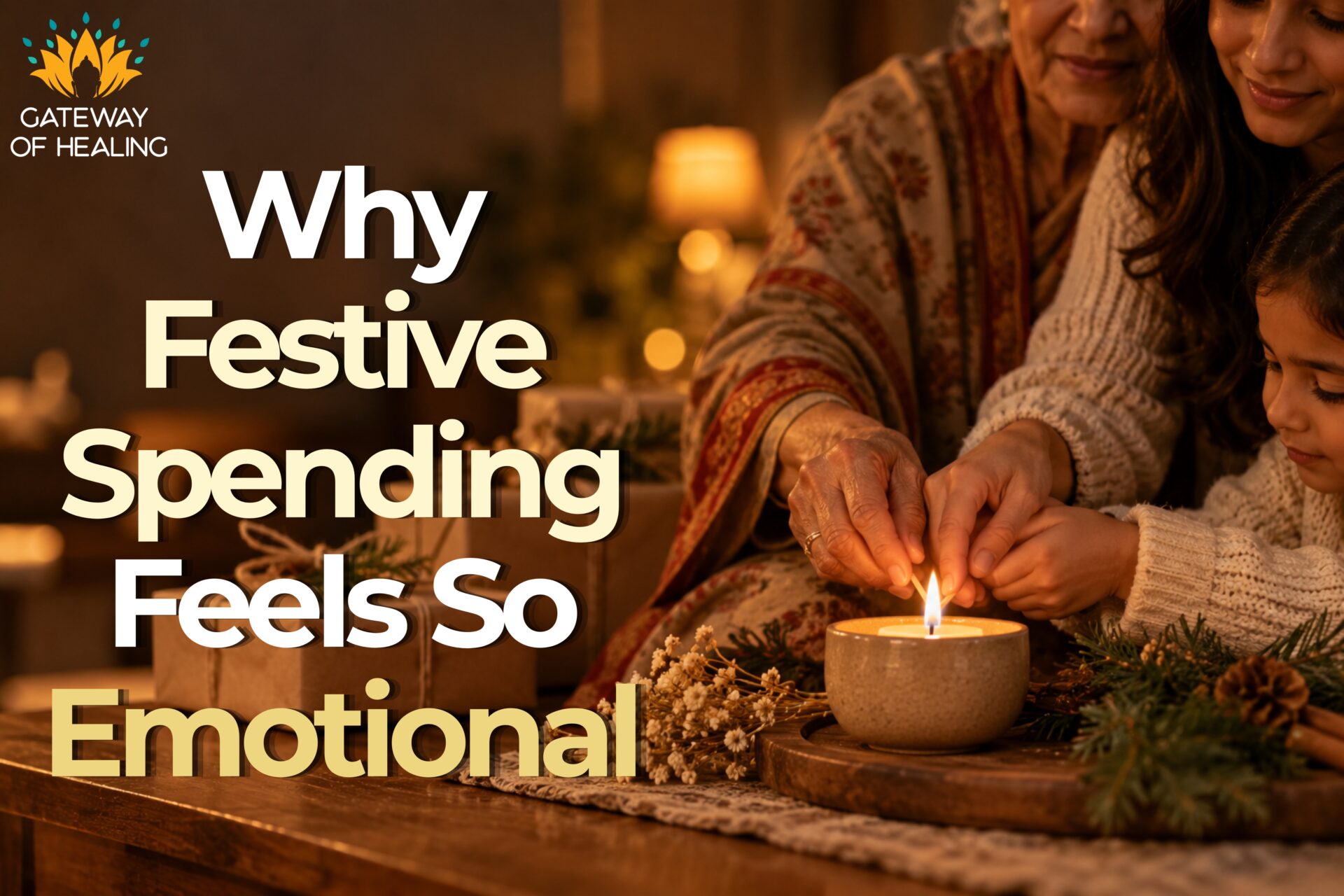
Festivals have a way of bringing out a different side of us. Homes feel warmer, markets become brighter, families come together, and there is a natural desire to celebrate, share and create beautiful memories, and often, this celebration finds its way into our shopping bags. A new outfit, gifts for loved ones, home decor, sweets, jewellery or something special just for ourselves can all be part of the festive experience. But have you ever noticed that festive spending does not always feel like ordinary spending? Sometimes it brings excitement and happiness. At other times, it can bring pressure, guilt, anxiety or even a strange feeling of emptiness after the purchase.
This is because festive spending is rarely only about money. It can also be connected to our emotions, memories, relationships, expectations and the way we see ourselves. Becoming aware of this connection can help us celebrate with greater joy without creating unnecessary financial or emotional overload.
The Emotions Behind Festive Spending
Festive spending can be an expression of love, generosity and joy. Buying a gift for someone we care about can make us feel connected to them. Purchasing something beautiful for ourselves can feel like a reward after months of hard work. Festivals can also awaken childhood memories, family traditions and feelings of nostalgia, making us want to recreate the warmth and excitement we remember.
At the same time, there can be subtler emotions underneath our spending. We may feel pressure to keep up with others, create a perfect celebration or show that we are doing well in life. Social media can intensify this comparison. Sometimes, shopping becomes a way of seeking comfort, excitement or a temporary emotional lift. None of this makes us irresponsible or wrong. It simply reminds us that our relationship with money is often deeply personal.
When Festive Spending Becomes Emotional Spending
Festive spending becomes emotional spending when the purchase is primarily being used to manage an emotion rather than fulfill a genuine need or conscious desire. For example, someone may shop excessively after a stressful day because buying something gives them a momentary sense of relief. Someone feeling left out may spend more to feel included. Another person may purchase expensive gifts because they fear that anything less will make them appear unsuccessful or uncaring.
The important question is not whether a purchase is expensive or inexpensive. The deeper question is, “What am I feeling before I make this purchase?” If shopping repeatedly becomes a way to escape stress, loneliness, insecurity, guilt or emotional discomfort, it may be helpful to pause and understand what the emotion is asking for.
How to Enjoy Festivals Without Financial or Emotional Overload
- Set Your Boundaries Early:
- Categorize Your Spending:
- Prioritize No-Cost Experiences:
- Protect What Matters Most:
Decide on a clear festive budget before you start shopping. Setting financial limits ahead of time allows you to enjoy generosity and celebration without the burden of post-festive stress.
Divide your expenses into three clear buckets: essentials, meaningful purchases, and spontaneous wants. Knowing where your money is going helps keep spending intentional.
Focus on non-material moments like cooking traditional food, decorating together, lighting a diya, or listening to music. The richness of a celebration comes from connection, not a receipt.
Shift your mindset from buying to being present. Making space for shared time with people you care about creates far more lasting joy than any material purchase.
Gentle Ways to Develop Healthier Spending Habits
Healthy spending does not mean removing pleasure from shopping. It means becoming more conscious about why we spend.
- Pause before purchasing. Give yourself a few moments to check whether the purchase feels intentional or impulsive.
- Ask a deeper question. “Do I genuinely want this, or am I trying to change how I feel?”
- Create a festive budget. Decide your comfortable limit before emotions take over.
- Separate needs from impulses. Not every attractive product needs to become a purchase.
- Reduce comparison. Someone else’s celebration does not have to become the standard for yours.
- Practice gratitude. Notice what is already abundant in life before looking for something new.
- Choose meaningful generosity. A thoughtful gift does not have to be the most expensive gift.
- Track emotional triggers. Notice whether certain moods consistently lead to unnecessary spending.
The Connection Between Emotional Healing and Spending
Our spending patterns can sometimes reveal emotional stories that we have never consciously examined. Perhaps we learned that giving expensive gifts is how love is expressed. Perhaps success was associated with visible possessions. Perhaps shopping became a reward for surviving difficult periods. These beliefs can quietly influence our choices long after the original experiences have passed.
Emotional healing begins with awareness rather than judgement. Instead of asking, “Why am I doing this again?” we can gently ask, “What is this behaviour trying to give me?” Sometimes the answer may be comfort. Sometimes recognition, security, freedom or a feeling of abundance. Once we understand the underlying need, we can begin finding healthier ways to meet it. This is where mindfulness, self-awareness and inner balance become powerful tools for holistic well-being.
How to Begin Letting Go
- Redefine What Letting Go Means: Releasing financial pressure isn’t about denying yourself nice things or feeling guilty about spending. It simply means enjoying shopping, gifting, and decorating without letting your self-worth depend on what you buy.
- Reframe Regret into Insight: Take responsibility for past choices without falling into self-punishment. Treat every financial choice as valuable feedback rather than a personal failure.
- Replace Guilt with Curiosity: Instead of carrying shame, ask what past spending can teach you, whether that means setting stronger boundaries, taking mindful pauses, or recognizing emotional triggers. Curiosity creates positive change where self-criticism fails.
A Simple Emotional Release Practice
The next time you feel a strong urge to make an unnecessary purchase, pause for a few minutes. Sit somewhere quiet, take several slow breaths and notice what is happening inside you. Ask yourself, “What am I really seeking right now?” Do not force an answer. Simply allow the feeling to surface.
You may wish to write down the emotion that appears, such as stress, excitement, loneliness, pressure or the desire to feel rewarded. Take a few more slow breaths and imagine releasing the pressure to act immediately. Remind yourself: “I can feel this emotion without needing to act on it.” Then decide whether the purchase still feels right. This simple pause can create a powerful space between emotion and action.
Frequently Asked Questions
1. Why do I spend more during festivals?
Festivals can combine excitement, social expectations, nostalgia, generosity and the desire to create beautiful experiences. These emotions can naturally increase the urge to spend.
2. Is festive shopping always emotional spending?
No. Enjoying shopping or purchasing festive items is not automatically emotional spending. It becomes a concern when spending repeatedly becomes a way of escaping or managing uncomfortable emotions.
3. How can I reduce impulse shopping during festivals?
Create a budget, make a shopping list and practise a short pause before non-essential purchases. Asking what you are feeling can also help you recognise emotional triggers.
4. How does mindfulness help with spending?
Mindfulness creates awareness between an emotional impulse and an action. Instead of automatically purchasing something, you become more conscious of your thoughts, feelings and intentions.
5. Can I enjoy festivals without spending a lot?
Absolutely. Connection, rituals, food, creativity, family time and meaningful experiences can make festivals deeply fulfilling without requiring excessive spending.
6. What if I already overspent?
Avoid turning financial regret into self-judgement. Review what happened, understand the emotional triggers involved and use the experience to create healthier boundaries for the future.
Festivals invite us to celebrate abundance, but abundance is not limited to what can be purchased. It can also be found in relationships, health, meaningful experiences, gratitude, laughter, memories and the ability to be present. The goal is not to stop spending or to feel guilty about enjoying beautiful things. The goal is to understand ourselves well enough to make choices that feel aligned.
Reach Dr. Chandni’s support team at +918800006786 and book an appointment.






















 facebook
 X
 youtube
 whatsapp
 instagram
 linkedin