
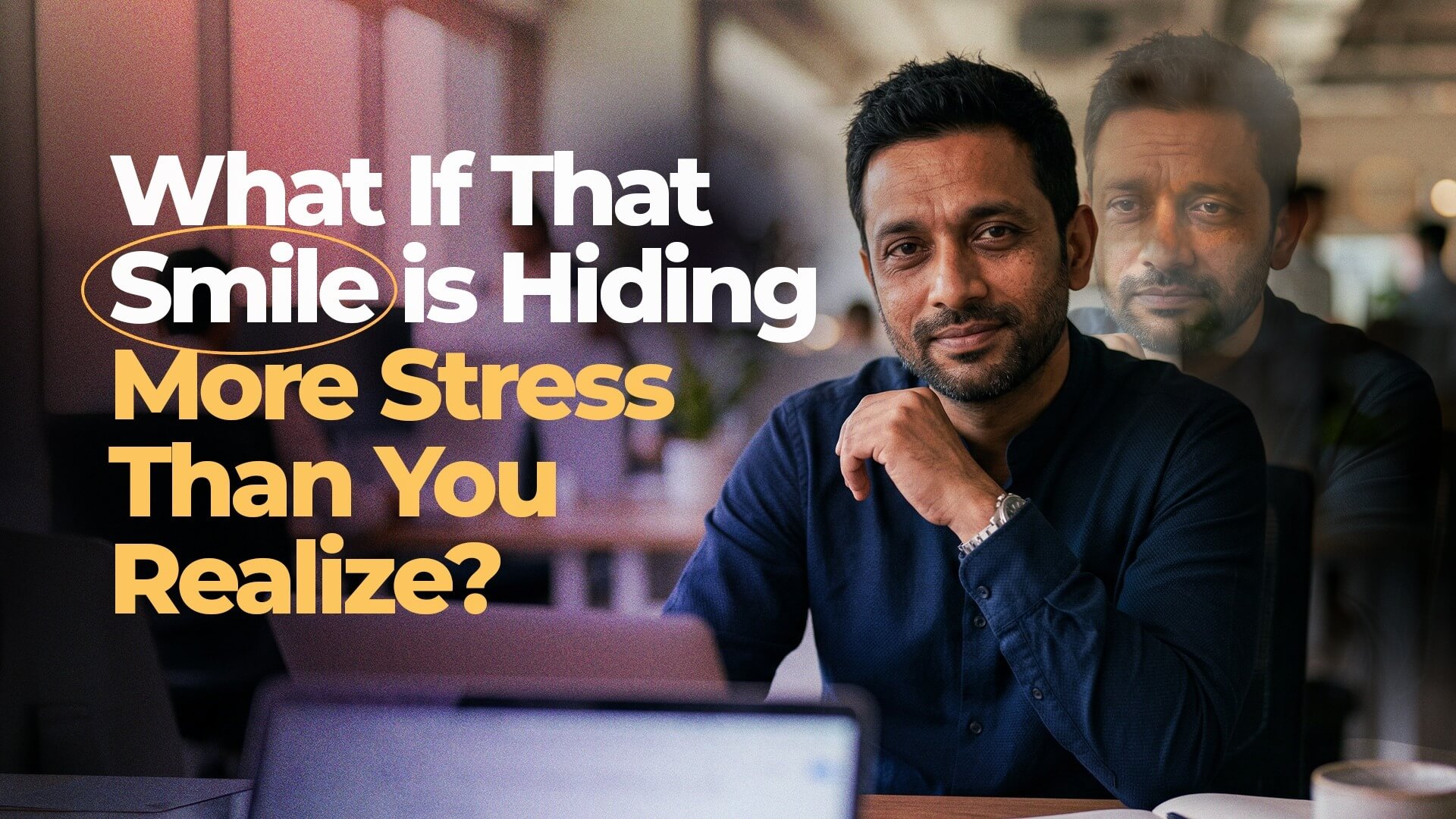
In many cultures, smiling is seen as a sign of well-being. If someone appears cheerful, we assume they are coping well. If they laugh often, we believe they are happy. But emotional reality is rarely this simple. A smile can be genuine, but it can also be protective. Many people learn early that showing distress invites discomfort, judgment, or misunderstanding. Over time, they develop the ability to appear composed while carrying significant internal stress. During Stress Awareness Month, it is important to recognise that visible positivity does not always reflect emotional ease.
The Social Expectation to Appear Fine
Modern life often rewards composure, with professional environments valuing emotional control and social spaces celebrating constant optimism. Even in personal relationships, there is sometimes a subtle pressure to prioritise harmony over honesty, leading us to present a stable image regardless of how we actually feel. You might notice yourself automatically saying “I’m fine”, smiling through emotional discomfort, or downplaying your exhaustion just to keep up. Whether it’s avoiding conversations about stress or pushing through productivity despite being burnt out, these responses aren’t necessarily dishonest. Instead, they are adaptive behaviours we’ve developed to maintain our functionality and stay connected to the people around us.
Why People Hide Stress Behind a Smile
Stress becomes easier to conceal when expression feels unsafe, and common reasons for that include:
- Fear of being perceived as weak
- Concern about burdening others
- Desire to maintain professional credibility
- Habitual people-pleasing
- Difficulty identifying emotional needs
In such cases, smiling becomes a coping mechanism. It reduces external tension even if internal pressure remains, but the problem arises when concealment becomes chronic.
The Difference Between Positivity and Suppression
Healthy positivity is about acknowledging a difficult situation while still choosing a constructive way to move forward, whereas emotional suppression avoids discomfort altogether. This suppression often hides behind forced optimism, using humour to deflect serious topics, or avoiding vulnerability by overcommitting to responsibilities. You might also notice a growing disconnection from your own bodily signals as you push through. Even if your mind appears calm on the surface, suppressed stress continues to accumulate, keeping your nervous system in a state of high alert.
The Physiological Impact of Hidden Stress
Stress that is not processed does not disappear. It manifests physically in your body, as the body communicates what the mind postpones. A smiling face can coexist with a highly activated nervous system. Recognising this disconnect is essential for genuine well-being. You may experience:
- Persistent fatigue
- Muscle tension
- Headaches or digestive issues
- Sleep disturbances
- Increased irritability
The Cultural Normalisation of Overfunctioning
Many individuals are praised for endurance, and they are admired for handling multiple responsibilities without visible struggle. This admiration can reinforce unhealthy patterns like:
- Ignoring personal limits
- Equating worth with productivity
- Avoiding rest
- Prioritising others’ needs consistently
Overfunctioning often masks stress rather than resolving it, and eventually, this hidden emotional exhaustion surfaces as the body reaches its limit. This suggests that true stress awareness involves a deeper look at our habits, requiring us to question whether we are chasing what society rewards at the expense of what our bodies actually require to stay healthy.
Emotional Literacy as a Stress Tool
Understanding stress requires emotional vocabulary. Without language for internal states, individuals rely on surface expressions. Instead of defaulting to ‘I’m stressed, explore:
- Am I overwhelmed?
- Am I anxious?
- Am I emotionally drained?
- Am I resentful?
- Am I disconnected?
Naming emotional states reduces their intensity. It also helps communicate needs more clearly, and smiling becomes a choice, not a mask.
Creating Safe Spaces for Honest Expression
Stress awareness is not just an individual task; it is deeply relational and depends on the culture of our surroundings. In supportive environments where people feel safe to have open conversations about their workload and receive validation for their emotional experiences, the need to hide behind a mask of constant positivity begins to fade. When a community encourages rest and works to reduce the stigma around mental health, psychological safety increases, and the pressure to maintain a facade decreases. Remember, when we feel truly supported by those around us, we no longer have to waste energy concealing our struggles and can instead focus on genuine well-being.
Recognising Hidden Stress in Others
Not everyone will articulate distress directly. Awareness includes noticing subtle cues. Look for:
- Sudden withdrawal
- Increased irritability
- Changes in sleep or appetite
- Loss of enthusiasm
- Overcommitment without satisfaction
Moving From Performance to Authentic Regulation
While stress management often focuses on specific techniques, these tools are only truly effective when they are built on a foundation of authenticity. Genuine relief doesn’t come from just going through the motions; it begins when the internal pressure to appear constantly composed finally diminishes, allowing you to be honest about your actual state.
Authentic regulation involves several key practices, such as allowing for honest emotional acknowledgement and setting realistic expectations for yourself. By creating structured rest and seeking professional support when needed, you move toward a sustainable form of well-being that prioritises your true needs over a polished outward image.
A Simple Stress Awareness Reflection
- Take a quiet moment.
- Sit comfortably. Place one hand on your chest.
- Ask yourself: “What am I carrying that I have not named?”
- Notice sensations without judgment. Awareness alone can soften internal pressure.
This practice encourages alignment between external expression and internal reality.
Redefining Strength
Strength is often associated with endurance, but emotional resilience includes the ability to acknowledge stress openly, because strength may look like:
- Admitting overwhelm
- Asking for support
- Reducing commitments
- Choosing rest
- Setting boundaries
Smiling can coexist with strength, but it should not replace honesty.
Frequently Asked Questions
Q1. Can someone appear happy and still be stressed?
A. Yes. External expressions do not always reflect internal states.
Q2. Is hiding stress harmful?
A. Short-term concealment may help in certain situations, but chronic suppression affects emotional and physical health.
Q3. How can I express stress without feeling vulnerable?
A. Start with small, trusted conversations and build emotional safety gradually.
Q4. Can stress exist without noticeable symptoms?
A. Yes. Some individuals internalise stress until physical or emotional signs emerge.
Q5. Does acknowledging stress make it worse?
A. No. Naming stress often reduces its intensity.
A smile can be genuine, reassuring, and healing. But it should not become a shield that prevents honest self-awareness. During Stress Awareness Month, the invitation is not to stop smiling. It is to ensure that your smile reflects inner alignment rather than concealed strain. When emotional honesty replaces silent endurance, stress becomes manageable. Awareness transforms coping into healing, and well-being becomes sustainable rather than performative.
Reach Dr. Chandni’s support team at +918800006786 and book an appointment.

































 facebook
  X
X  youtube
  whatsapp
  instagram
  linkedin