
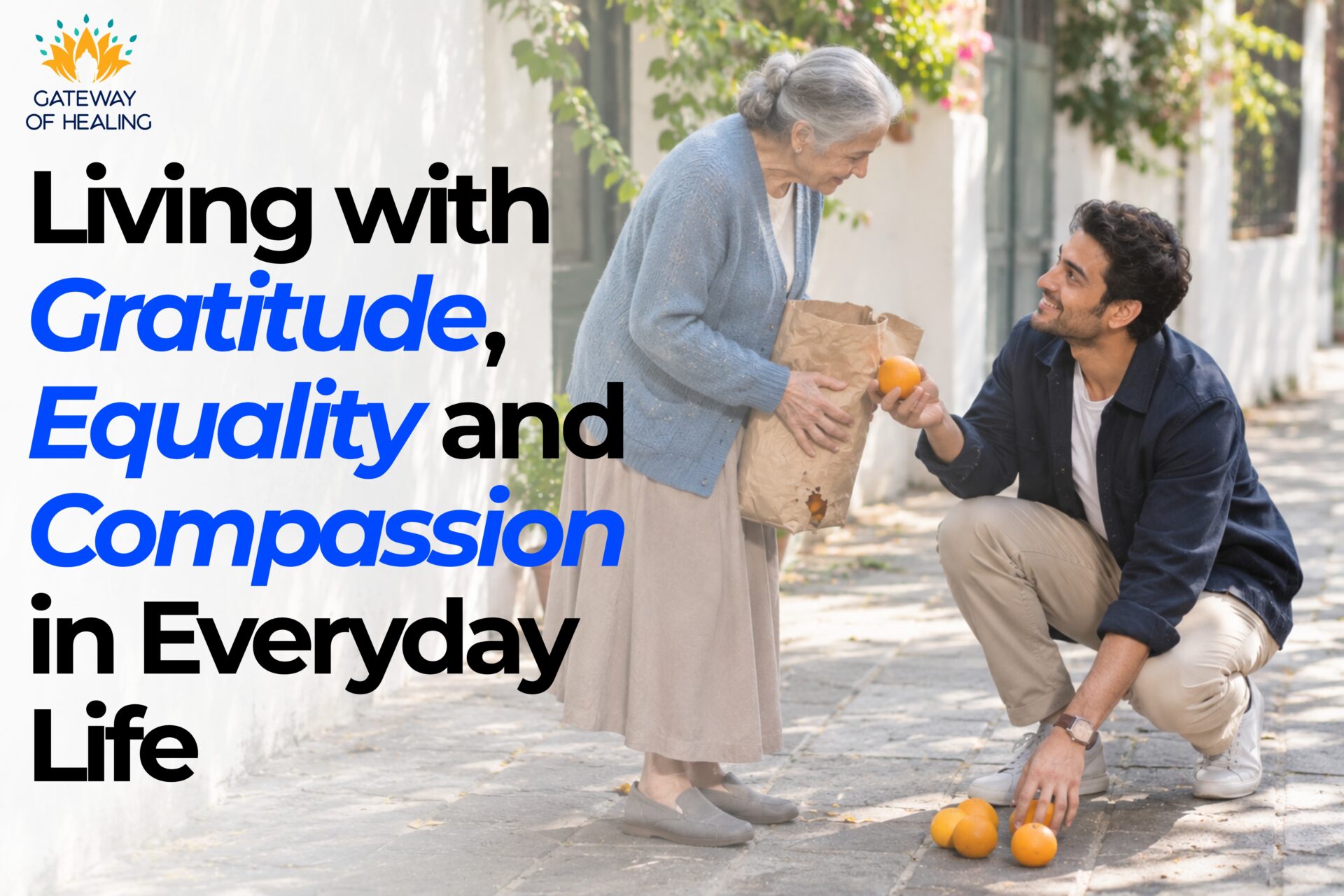
It is easy to appreciate life when things are going well, treat others fairly when we agree with them, and show compassion when someone else’s struggles are easy to understand. The real test often comes in ordinary moments: when a colleague receives recognition we hoped for, when someone expresses an opinion that challenges our beliefs, or when we are so overwhelmed by our own responsibilities that another person’s difficulties feel like an inconvenience. These moments may appear insignificant, but they reveal the values guiding our everyday choices.
Gratitude, equality and compassion are often discussed as admirable qualities, yet their deeper meaning emerges when we begin practising them in our daily lives. Gratitude helps us recognise what we value without denying what needs to change. Equality reminds us that every person deserves dignity and fair treatment, regardless of their background or circumstances. Compassion allows us to respond to human experiences with understanding while maintaining appropriate boundaries. Together, these values can influence not only how we relate to others, but also how we understand ourselves and contribute to the world around us.
Understanding the Connection Between Gratitude, Equality and Compassion
Gratitude, equality and compassion may appear to be separate values, but they are closely connected. Gratitude encourages us to notice the contributions, opportunities and relationships that enrich our lives. Equality challenges us to recognise that dignity and respect should not depend on a person’s wealth, position, appearance or social standing. Compassion helps us respond to the experiences of others with sensitivity rather than indifference or immediate judgement.
When these values work together, they can change the way we approach everyday interactions. We may become more appreciative of the people whose efforts often go unnoticed, more willing to question unfair assumptions and more thoughtful when someone is struggling. This does not require us to agree with everyone or ignore differences between people. It asks us to recognise our shared humanity while respecting the different experiences, needs and circumstances that shape each person’s life.
Practising Gratitude Without Ignoring Reality
Gratitude is more than saying thank you or listing the positive things in our lives. It involves developing the ability to recognise what is meaningful, even when life remains imperfect. We can appreciate a supportive relationship while acknowledging that it needs work, value our opportunities while recognising the challenges we face, and feel grateful for progress without pretending that disappointment does not exist.
A balanced approach to gratitude allows us to hold appreciation and difficulty at the same time. You can begin by noticing the people who make your day easier, the opportunities you sometimes take for granted, or the small moments that offer comfort during a demanding period. Over time, this practice may help shift your attention towards what is valuable without requiring you to suppress difficult emotions or accept circumstances that need to change.
Bringing Equality Into Everyday Interactions
Equality is not limited to laws, policies or major social movements. It is also reflected in the everyday ways we treat people, particularly when we have more authority, privilege or influence than they do. The way we speak to a service worker, listen to a colleague, involve quieter voices in a conversation or respond to someone whose background differs from ours can reveal whether we genuinely believe that every person deserves dignity and respect.
Living with equality requires more than good intentions. It also involves noticing assumptions and habits that may unintentionally exclude or disadvantage others. Consider how you can practise this value:
- Listen without making assumptions: Allow people to express their experiences rather than deciding what they must think or feel based on their background.
- Treat people with consistent respect: Recognise the dignity of others regardless of their occupation, income, education or social position.
- Make room for different perspectives: Encourage participation and take concerns seriously, particularly when someone has less power or influence in a situation.
- Question unfair behaviour: When appropriate, speak up against disrespect, exclusion or unequal treatment instead of assuming that silence is neutral.
Equality does not mean that everyone has identical needs or circumstances. It means recognising that differences should not become excuses for discrimination or the denial of dignity, opportunity and fair treatment.
Choosing Compassion Over Immediate Judgement
Compassion begins when we recognise that there may be more to another person’s behaviour than what we can see in a single moment. Someone who appears impatient may be dealing with pressure we know nothing about, while a person who seems distant may be struggling to communicate what they feel. Recognising these possibilities does not mean excusing hurtful behaviour. It means allowing room for understanding before deciding how to respond.
Compassion can also be directed towards ourselves. We may expect ourselves to remain patient, productive and emotionally balanced even when we are exhausted or facing difficulties. When we respond to our own struggles with harsh judgement, it can become harder to extend understanding to others. Practising compassion involves acknowledging mistakes, taking responsibility where necessary and recognising that people can learn and change without being reduced to their worst moments.
How Small Acts Can Reflect Our Values
Values become meaningful when they influence our behaviour consistently. A sincere expression of appreciation, a willingness to hear someone out, or the decision to help without expecting recognition may appear small, but these actions can contribute to more respectful and supportive relationships. The significance lies not in the size of the gesture, but in the intention and consistency behind it.
You can bring these values into everyday life through a few simple practices:
- Express genuine appreciation: Acknowledge someone’s effort or kindness specifically rather than relying on a routine thank-you.
- Offer your attention: Put aside distractions during important conversations and allow others to feel heard.
- Respond thoughtfully: Pause before reacting when you feel irritated, threatened or misunderstood.
- Challenge your assumptions: Consider whether your judgement is based on what you know or on an expectation you have not questioned.
- Help within your capacity: Offer practical support where possible without neglecting your own responsibilities or expecting something in return.
These actions do not guarantee that every interaction will be positive. However, they allow us to practise our values in situations where our choices can make a meaningful difference.
Maintaining Compassion While Protecting Your Boundaries
One common misunderstanding about compassion is that it requires us to tolerate every behaviour, agree with everyone or place other people’s needs above our own. In reality, compassion and boundaries can coexist. You can understand why someone may be struggling without accepting repeated disrespect, and you can care about another person’s well-being without taking responsibility for every problem they experience.
Healthy boundaries help ensure that gratitude does not become an obligation to remain in harmful situations, equality does not require you to ignore unfairness, and compassion does not become self-neglect. You can communicate your limits respectfully, decline requests you cannot reasonably fulfil and seek support when a situation becomes difficult to manage. Living according to your values means extending dignity and understanding to others while recognising that your own well-being deserves consideration too.
A Simple Daily Practice to Live These Values
Set aside five to ten minutes at the end of your day to reflect on how gratitude, equality and compassion appeared in your interactions. Think about one moment when you appreciated someone’s contribution, treated another person fairly or responded to a difficult situation with understanding. Then consider whether there was a moment when impatience, comparison or an assumption influenced your behaviour. The purpose is not to judge yourself, but to understand how your values are expressed in real situations.
Use these questions as a starting point:
- What is one thing or person I genuinely appreciated today?
- Did I treat the people I encountered with dignity and respect, regardless of their position or circumstances?
- When did I respond with compassion, and when did I find it difficult?
- Did I make any assumptions about someone without understanding their perspective?
- What is one action I can take tomorrow to express these values more consciously?
Choose one small action to carry forward into the next day. You might express appreciation to someone whose effort you overlooked, listen more carefully during a disagreement or reconsider an assumption that influenced your response. With regular practice, these moments of reflection can help you bring greater awareness and consistency to the way you live.
Creating a Life Guided by Gratitude, Equality and Compassion
A meaningful life is not measured only by personal achievements, possessions or recognition. It is also reflected in how we make people feel, how we respond to differences and whether our everyday actions align with the values we claim to hold. Gratitude helps us recognise what enriches our lives, equality reminds us to respect the dignity of others, and compassion allows us to respond to human experiences with greater understanding. These values become especially meaningful when practising them requires patience, courage or a willingness to question our own assumptions.
You will not always respond perfectly, and there will be moments when frustration, fear or personal pressure influences your behaviour. What matters is the willingness to recognise those moments and make a different choice when you can. Living with gratitude, equality and compassion is not about appearing virtuous or avoiding conflict. It is about developing a more conscious relationship with yourself and others, where appreciation does not deny reality, fairness does not depend on status, and kindness does not require abandoning your boundaries. Sometimes, the most meaningful contribution we make begins with the way we choose to treat the person standing in front of us.
Frequently Asked Questions
Q1. How can gratitude, equality and compassion improve everyday life?
These values can support healthier relationships, more thoughtful communication and greater awareness of how our actions affect others. Gratitude encourages appreciation, equality promotes fair treatment, and compassion helps us respond to difficulties with understanding.
Q2. How can I practise gratitude without ignoring my problems?
Recognise what you appreciate while remaining honest about your challenges. Gratitude does not require you to suppress difficult emotions or accept circumstances that need to change. Both appreciation and the desire for improvement can exist together.
Q3. What does equality mean in everyday interactions?
Equality means treating people with dignity and respect regardless of their background, position or circumstances. It also involves recognising unfair assumptions, listening to different perspectives and helping create opportunities for people to participate fairly.
Q4. How can I be compassionate without allowing others to take advantage of me?
Compassion involves understanding another person’s experience without automatically accepting their behaviour. Maintain clear boundaries, communicate your limits respectfully and recognise that caring for others does not require neglecting your own well-being.
Q5. What is the easiest way to begin living by these values?
Start with one conscious action each day. Express genuine appreciation, listen without interrupting, question an unfair assumption or offer support when you reasonably can. Small, consistent actions can help turn personal values into everyday habits.
Living with gratitude, equality and compassion begins with the choices we make when ordinary life gives us opportunities to practise them. Each interaction offers a chance to appreciate, understand and treat others more fairly. By bringing these values into our daily behaviour, we can contribute to a way of living that is more conscious, respectful and connected.
Reach Dr. Chandni’s support team at +918800006786 and book an appointment.
































 facebook
 X
 youtube
 whatsapp
 instagram
 linkedin