
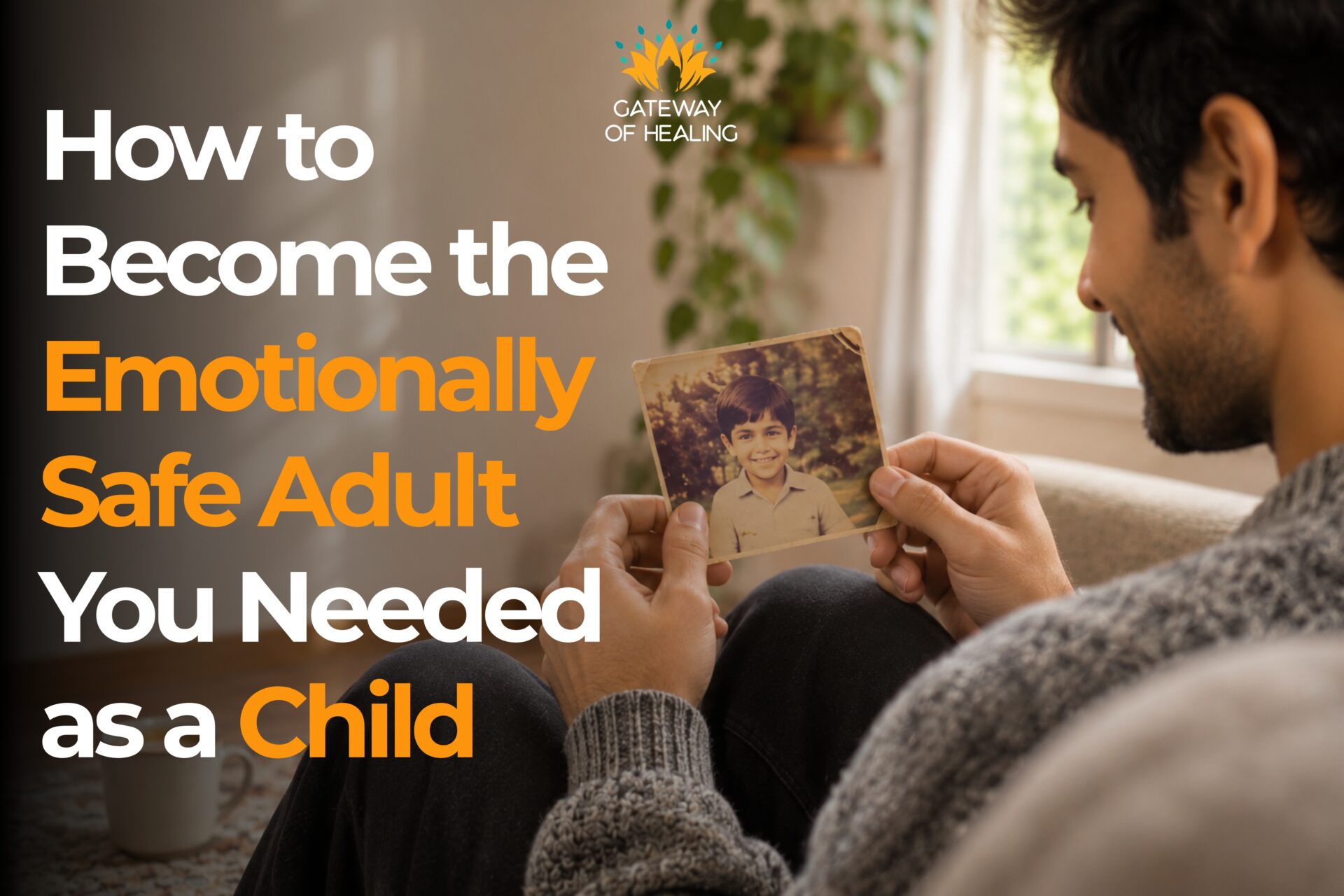
Have you ever noticed yourself reacting more strongly to a situation than you expected? Perhaps a small disagreement leaves you feeling rejected, a mistake makes you question your worth, or someone’s disappointment creates an overwhelming need to make things right. You may understand, logically, that the situation is manageable, yet emotionally, it feels much bigger than the moment itself. Sometimes, these reactions are connected to experiences in which our emotional needs were not fully understood, acknowledged or supported while we were growing up.
Becoming the emotionally safe adult you needed as a child is not about blaming your parents, rewriting your past or learning to handle every situation perfectly. It is about understanding how your early experiences may have influenced your relationship with yourself and gradually developing healthier ways to respond to your emotions, needs and relationships. You cannot change the childhood you experienced, but you can begin creating a present in which your feelings are acknowledged, your boundaries are respected and your sense of worth is not dependent on constant approval from others.
Understanding What Emotional Safety Really Means
Emotional safety is the experience of being able to express your feelings, acknowledge your needs and make mistakes without constantly fearing humiliation, rejection or punishment. During childhood, this sense of safety is often supported by adults who listen without immediately dismissing feelings, provide guidance without shaming, and offer reassurance while maintaining appropriate boundaries. When these experiences are inconsistent or missing, a child may learn to hide emotions, anticipate criticism or become unusually attentive to other people’s moods.
However, not every difficult childhood experience leads to lasting emotional difficulties, and adults can develop emotional resilience in many different ways. What matters is understanding your own experiences without making assumptions about them. You may begin to notice that you find it difficult to ask for help, feel guilty when you say no or believe that you must always appear strong. These patterns are not proof that something is wrong with you. They may be learned responses that once helped you navigate difficult circumstances but now deserve a more thoughtful approach.
Recognising the Childhood Patterns You Carry Into Adulthood
The ways we learned to protect ourselves emotionally can continue influencing our behaviour long after our circumstances have changed. A child who received approval mainly for achievement may become an adult who struggles to feel worthy without being productive. Someone whose feelings were frequently dismissed may learn to minimise their own distress, while a person who experienced unpredictable reactions from caregivers may become highly sensitive to changes in other people’s moods.
Recognising these patterns is not about finding fault with yourself or the people who raised you. It is about understanding the connection between past experiences and present behaviour. Consider whether any of the following feels familiar:
- People-pleasing: You prioritise keeping others happy because disagreement or disappointment feels difficult to tolerate.
- Harsh self-criticism: You respond to mistakes with shame rather than allowing yourself to learn and improve.
- Emotional suppression: You hide sadness, anger or fear because you believe expressing these feelings makes you weak or difficult.
- Fear of rejection: You interpret distance, disagreement or delayed responses as signs that someone no longer values you.
- Difficulty receiving support: You feel uncomfortable asking for help because you believe you should be able to manage everything independently.
These patterns can have many causes, so it is important not to interpret every behaviour through the lens of childhood. The purpose of recognising them is to understand what you experience today and identify healthier ways of responding.
Learning to Become a Safe Place for Your Own Emotions
One of the most important aspects of emotional growth is learning that feelings do not need to be suppressed, justified or immediately resolved to be acknowledged. You may have learned to move past disappointment quickly, hide anger to avoid conflict or dismiss sadness because someone else had greater difficulties. As an adult, you can practise responding differently by allowing yourself to recognise what you feel before deciding what to do about it.
This does not mean acting on every emotion or treating every feeling as an accurate reflection of reality. It means listening to the information an emotion may carry while choosing your response thoughtfully. You can feel angry without being hurtful, feel afraid without abandoning an important goal, and feel disappointed without concluding that your life is going wrong. Emotional safety develops when you learn to make room for your feelings without allowing them to define your identity or control every decision.
How to Offer Yourself the Understanding You Needed
Becoming a more emotionally supportive adult begins with the small moments in which you choose how to respond to yourself. When you make a mistake, you can acknowledge what happened without attacking your character. When you feel overwhelmed, you can recognise your limits instead of demanding that you keep going. When you need reassurance, you can acknowledge that need rather than judging yourself for having it.
You can begin practising this through a few everyday choices:
- Replace criticism with understanding: Instead of asking why you always get things wrong, ask what happened and what you can learn from it.
- Give your feelings a name: Recognise whether you feel hurt, disappointed, anxious, lonely or frustrated rather than describing every uncomfortable emotion as stress.
- Allow yourself to need support: Reach out to someone trustworthy when you need perspective, reassurance or practical help.
- Respect your own limits: Recognise when you need rest, space or time before responding to a difficult situation,
- Acknowledge your efforts: Notice the moments when you respond more thoughtfully, communicate honestly or make a choice that supports your well-being.
These practices are not about making life comfortable at every moment. They help you develop a more dependable relationship with yourself, one in which you can experience difficult emotions without adding unnecessary shame or self-rejection.
Building Boundaries Without Feeling Guilty
For some adults, setting boundaries can feel uncomfortable because they associate saying no with disappointing others, creating conflict or risking rejection. If you learned early in life that keeping people happy was necessary for maintaining harmony, you may find yourself agreeing to responsibilities you cannot manage or remaining silent when something hurts you. Over time, this can lead to resentment, emotional exhaustion and a weakened sense of personal choice.
Healthy boundaries allow you to care about others without abandoning yourself. You can decline a request respectfully, ask for time before making a decision or communicate that a conversation is becoming unproductive. You may still feel guilty or anxious when you begin setting boundaries, particularly if the behaviour is unfamiliar. That discomfort does not automatically mean you are doing something wrong. The aim is to communicate with respect while recognising that another person’s disappointment does not always mean you have made an unreasonable choice.
Changing the Way You Experience Relationships
Our early relationships can influence what feels familiar in adulthood, but familiarity and emotional safety are not the same thing. You may find yourself working hard to earn affection, feeling responsible for another person’s emotions or becoming uncomfortable when a relationship is calm and consistent. Recognising these tendencies can help you distinguish between a connection that requires constant emotional effort and one in which both people can communicate, disagree and repair misunderstandings with respect.
As you build healthier relationships, pay attention to the following:
- Look for consistency: Notice whether a person’s words and actions generally align over time, rather than relying only on intense moments of affection or reassurance.
- Practise honest communication: Express your needs and concerns clearly instead of expecting others to understand what you have not communicated.
- Allow disagreement: Recognise that healthy relationships can include differences of opinion without requiring humiliation, intimidation or emotional punishment.
- Take responsibility without overfunctioning: You can acknowledge your mistakes and repair harm without assuming responsibility for every feeling or problem another person experiences.
Becoming emotionally safe for yourself does not mean tolerating harmful behaviour from others or trying to heal every relationship through greater patience. It also means recognising when a relationship needs firmer boundaries, outside support or distance.
A Simple Practice to Reconnect With Yourself
Set aside ten minutes in a quiet space to reflect on a recent situation that brought up a strong emotional response. Instead of judging your reaction or trying to explain it away, consider what you felt, what you needed and how you responded. You do not need to revisit painful childhood memories in detail to benefit from this exercise. Begin with a present-day experience and focus on understanding yourself with greater honesty and care.
Use these questions as a starting point:
- What happened, and what emotion did I experience?
- What did I need in that moment but find difficult to ask for?
- What did I tell myself about my feelings or my worth?
- How could I respond to myself with greater understanding next time?
- What is one supportive action I can take now?
Write down your answers without expecting an immediate breakthrough. You might discover that you need reassurance, a clearer boundary, rest or a more balanced way of interpreting a situation. Choose one small action that supports that need. If reflection brings up overwhelming distress or painful memories, pause and consider exploring them with a qualified mental health professional.
Becoming the Adult Who Chooses a Different Pattern
Healing does not mean becoming someone who never feels insecure, never needs reassurance or always responds calmly. It means developing the awareness to recognise your patterns and the ability to make different choices when you can. Some days, you may respond to yourself with patience; on others, you may return to familiar habits, particularly when you are tired, stressed or emotionally overwhelmed. Progress lies in recognising these moments and learning how to begin again without turning a setback into another reason for self-criticism.
You may not have received every form of emotional support you needed while growing up, and acknowledging that reality can bring sadness, anger or grief. You do not need to deny those feelings to move forward. You can recognise what was missing, appreciate the ways you learned to cope and gradually develop healthier ways of living today. Becoming the emotionally safe adult you needed as a child is ultimately about creating a relationship with yourself in which honesty is welcome, mistakes can become opportunities to learn, boundaries are respected and care is not something you must constantly earn.
Frequently Asked Questions
Q1. What does it mean to become the emotionally safe adult you needed as a child?
It means developing the emotional awareness, self-compassion, boundaries and coping skills that help you respond to yourself with greater understanding and care. It involves recognising old patterns while building healthier ways to manage emotions and relationships in the present.
Q2. How can childhood experiences affect emotional well-being in adulthood?
Early experiences can influence how people respond to conflict, express their needs, manage emotions and experience relationships. These influences vary from person to person, and they do not determine an individual’s future. Greater awareness and appropriate support can help people develop new patterns.
Q3. How can I stop being so hard on myself?
Begin by noticing your self-critical thoughts and questioning whether they help you solve a problem or simply increase your distress. Practise acknowledging mistakes honestly while speaking to yourself with the same fairness and understanding you would offer someone you care about.
Q4. Can I heal childhood emotional wounds without professional help?
Self-reflection, supportive relationships and healthier daily habits can help many people develop greater emotional awareness. However, persistent distress, difficult memories or recurring relationship patterns may benefit from working with a qualified mental health professional. Seeking help is a constructive choice, not a personal failure.
Q5. How long does it take to develop emotional safety within yourself?
There is no fixed timeline. The process depends on your experiences, circumstances, support system and the patterns you are working to change. Small, consistent steps can help you build self-trust over time, and progress does not require you to feel emotionally secure in every situation.
You cannot change the care you received as a child, but you can influence the care you offer yourself today. Each time you acknowledge a feeling, respect a boundary, ask for support or respond to a mistake without cruelty, you create an opportunity to practise a different way of relating to yourself. The journey is not about becoming a perfect adult. It is about becoming someone who can meet their own experiences with greater understanding, responsibility and compassion.
Reach Dr. Chandni’s support team at +918800006786 and book an appointment.






































 facebook
 X
 youtube
 whatsapp
 instagram
 linkedin