
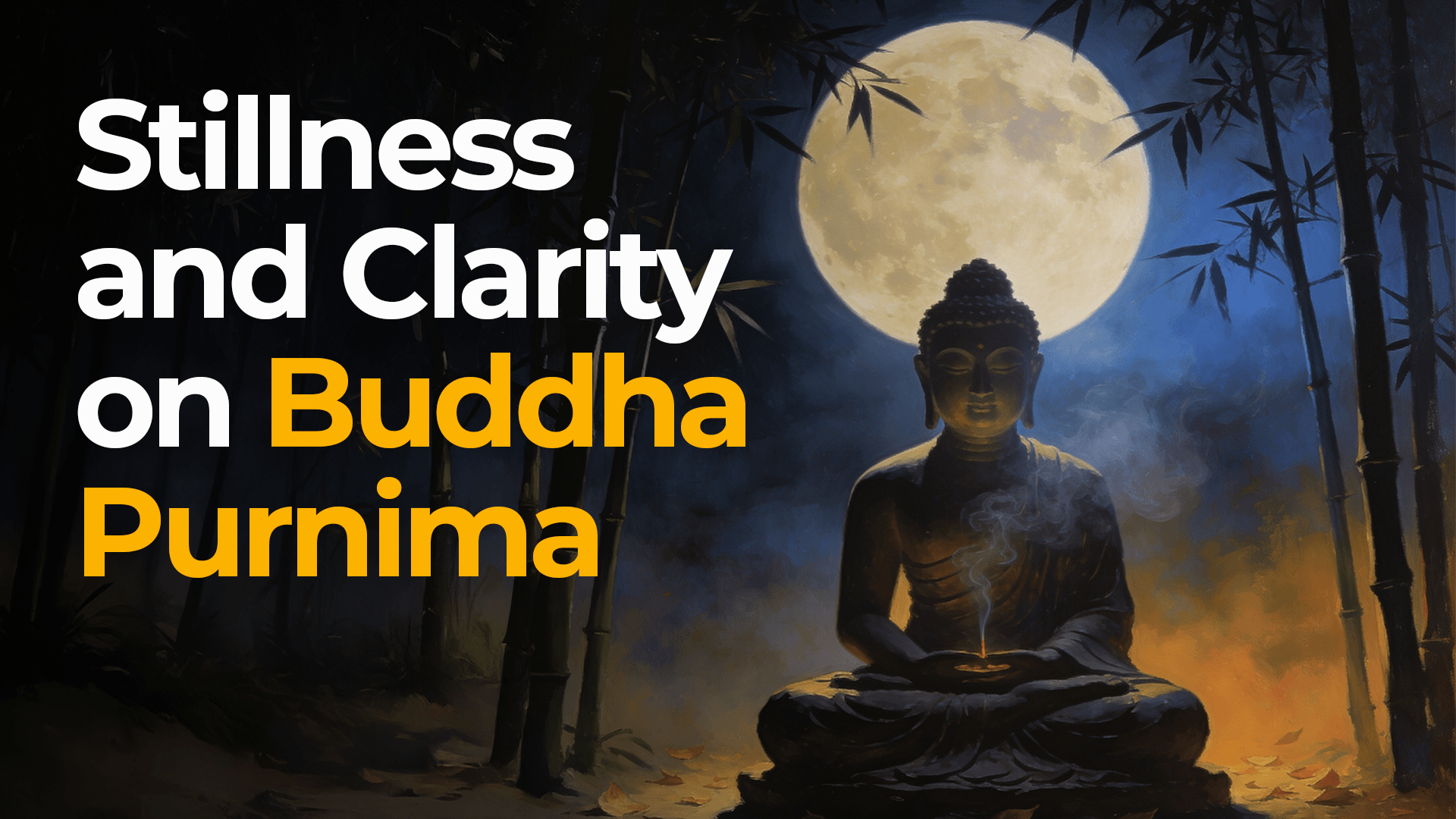
Buddha Purnima marks the birth, enlightenment, and passing of Gautama Buddha, serving not just as a day of remembrance but as a profound reminder of a path rooted in inner clarity rather than external change. In a world that moves quickly, reacts instantly, and prioritises constant stimulation, stillness can often feel unfamiliar. Yet, stillness is not emptiness; it is awareness without noise, the vital space where true clarity begins.
This day invites you to pause, not as a means to escape life, but as a way to see it more clearly. By intentionally stepping away from the rush, you create the necessary space to cultivate the wisdom required to navigate daily challenges with a steadier heart and a quieter mind.
Why Stillness Feels Difficult Today
Modern life is structured around activity. Notifications, deadlines, conversations, and responsibilities keep the mind engaged continuously. When external activity slows, internal noise becomes noticeable, and you may experience:
- Restlessness
- Racing thoughts
- Discomfort in silence
- Urge to check devices
- Difficulty staying present
This discomfort is not a sign that stillness is unhelpful, but it is a sign that the mind is not used to it. Stillness reveals what distraction hides.
The Buddha’s Insight on Clarity
The essence of Buddha’s teachings centres on observation, not control, not suppression, but awareness. Clarity arises when you:
- Observe thoughts without reacting
- Notice emotions without identifying with them
- Recognise patterns without judgment
This shift changes your relationship with experience. Instead of being carried by every thought or feeling, you begin to witness them. Clarity is not about having fewer thoughts, but about not being controlled by them.
The Nervous System and Inner Calm
Stillness is often framed as a mental practice, but it is fundamentally a physiological state. When your nervous system is constantly activated, kept in a state of high alert, the mind naturally seeks external stimulation to match that internal pace. This is why silence can feel uncomfortable or jarring; it isn’t a failure of your ability to focus, but a signal that the body is not yet regulated.
When the nervous system finally settles, you will notice distinct physical shifts that create the necessary space for calm:
- Breathing slows
- Muscles relax
- Attention stabilises
- Emotional responses soften
Your breath deepens, and your rhythm stabilises.
Chronic tension begins to leave the jaw, shoulders, and core.
The mind stops jumping between distractions, allowing for focus.
You move out of reactive “fight-or-flight” mode, creating distance between an impulse and an action.
In this settled state, clarity emerges naturally. You do not need to force or “create” clarity; you simply uncover it by reducing the internal and external noise that keeps your system in a state of constant reaction.
The Difference Between Silence and Stillness
Silence is the absence of external sound, and stillness is the presence of awareness. You can be in a quiet room and still feel mentally overwhelmed. You can also be in a busy environment and feel calm on the inside, because stillness is cultivated intentionally. It involves:
- Returning attention to the present moment
- Observing without immediate reaction
- Allowing experiences to pass without resistance
- Buddha Purnima emphasises this inner stillness.
Why Clarity Comes After Slowing Down
Many people attempt to solve problems while overwhelmed, but in that state, thinking often becomes repetitive and reactive. By deliberately slowing down, you allow your perspective to widen, emotional intensity to reduce, and grounded decisions to emerge. Clarity is not a state that can be forced; rather, it surfaces naturally as mental pressure decreases. Ultimately, stillness is the vital tool that creates the necessary space for these solutions to become visible.
A Simple Buddha Purnima Stillness Practice
You do not need complex rituals to experience this. Just sit comfortably, and keep your spine relaxed but upright.
- Close your eyes gently.
- Bring your attention to your breath. Do not change it. Just observe it.
- When thoughts arise, notice them and return to the breath.
- Continue for a few minutes.
If the mind wanders, gently bring it back without frustration, as this is not about perfection, but about practice.
Observing Without Judgment
A key part of Buddha’s teaching is non-judgment. When you observe your thoughts, you may notice:
- Self-criticism
- Worry about the future
- Regret about the past
The instinct is to react or fix them, but instead, observe: “This is a thought,” “This is a feeling.” This separation reduces emotional intensity, and clarity grows when judgment reduces.
Bringing Stillness into Daily Life
Stillness does not need to be limited to the formal practice of meditation; it is a quality you can integrate into the fabric of your daily life. You can cultivate this state by pausing before responding in conversations, taking a few conscious breaths before making important decisions, eating without distraction, and walking without the urge to rush. When you intentionally weave these small moments of awareness into your routine, they begin to accumulate over time, eventually allowing stillness to stop being something you only “do” for a set period and transforming it into a natural way of being that grounds you throughout your day.
The Role of Letting Go
Clarity is often blocked by our deep-seated attachment to specific outcomes, rigid opinions, and unyielding expectations. Buddha’s teachings encourage us to view “letting go” not as a loss, but as a necessary release from an unnecessary burden. When you consciously release the need to control every situation, the need to be constantly right, and the habit of clinging to past experiences, you create essential space within yourself. It is in that spaciousness, finally free from the weight of these attachments, that true clarity naturally arises.
When Stillness Feels Uncomfortable
It is normal to feel resistance initially, and you may feel:
- Boredom
- Restlessness
- Emotional discomfort
This does not mean the practice is ineffective; it means you are encountering what has not been processed. At this point, stay with it gently, and over time, discomfort reduces, and awareness deepens.
A Reflection for Buddha Purnima
Take a moment today, and ask yourself:
- What am I holding onto that creates mental noise?
- Where can I allow more space in my life?
- What does clarity feel like in my body?
Frequently Asked Questions
Q1. Do I need long meditation sessions to feel stillness?
A. No. Even a few minutes of conscious awareness can create noticeable shifts.
Q2. What if my mind does not stop thinking?
A. The goal is not to stop thoughts, but to observe them without attachment.
Q3. Can stillness reduce stress?
A. Yes. It supports nervous system regulation and emotional balance.
Q4. Is stillness the same as doing nothing?
A. No. It is active awareness, not inactivity.
Q5. How often should I practice stillness?
A. Consistency matters more than duration. Daily short practices are effective.
Buddha Purnima is a reminder that clarity is not found by adding more to your life, but by removing what clouds your awareness. Stillness is not an escape from reality. It is a way of seeing it more clearly. When you allow yourself to pause, observe, and release, your mind settles and your perspective shifts. In that quiet space, clarity does not need to be chased. It reveals itself.
Reach Dr. Chandni’s support team at +918800006786 and book an appointment.







































 facebook
  X
X  youtube
  whatsapp
  instagram
  linkedin
Excellent explanation, thanks!
This really helped me a lot.
Great article, very helpful!